Laughing Pirates Deodorizers Available Online at special BOGO pricing

IMG_3602

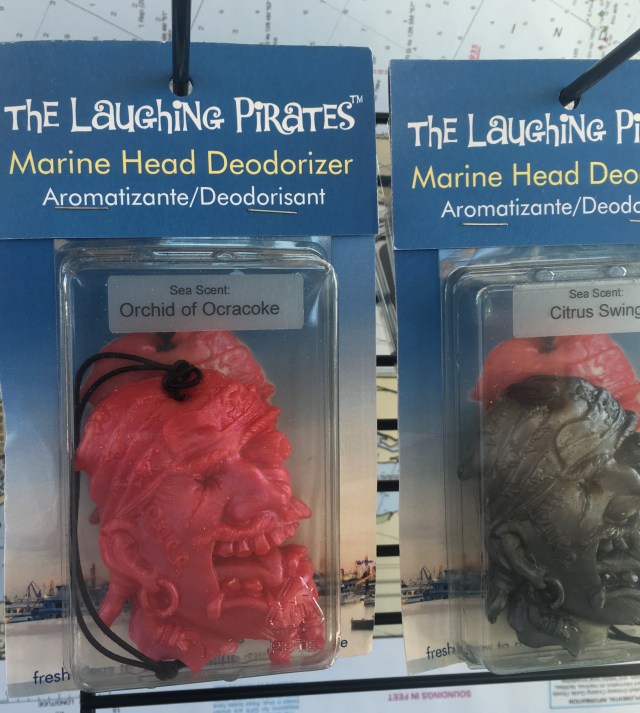
(Carded retail display packaging shown)

The Laughing Pirates are offering the first pirate-powered solution to persistent, malodorous areas, such as typically found in marine or RV toilets commonly known as “heads.” The products feature state-of-the-art odor neutralizers combined with a choice of three gentle fragrances in a soft, compact solid-gel pirate form that lasts for months! Each includes its own noose so that it can be hung where you need to ruthlessly attack odors, from boats to RV’s to sports lockers.  Click on the PayPal button below each description to automatically order our special 2FER packaged units of the scent you want to put to work for $8.99 for both!

Buy One, Get One Free  through PayPal, sign up for a PayPal account or simply and securely pay with your preferred credit card and the shipping is FREE (within the continental USA)!  Click the button immediately below each fragrance.

And be sure to let us know how you like the product by adding your experience to the reply/comment section.

Click  the button immediately below the scent and color you would like, complete the billing and shipping details needed and we will rush two units to you.  Offer good as long as supplies last.

Scent:  Bath Night in Barbados (BLUE color & clean, cool scent)
Buy Now Button

Scent: Citrus Swing (GRAY color & fresh lemon scent)
Buy Now Button

Scent: Orchid of Ocracoke (RED color with floral fragrance) 
Buy Now Button

 Pay via PayPal or any of these credit cards, no PayPal sign-up is required. Click below for more information about PayPal
PayPal Acceptance Mark

When will it be “safe” again?

D4DC453E-2FE8-4D8B-90B6-38E1428E7FF1_1_201_a

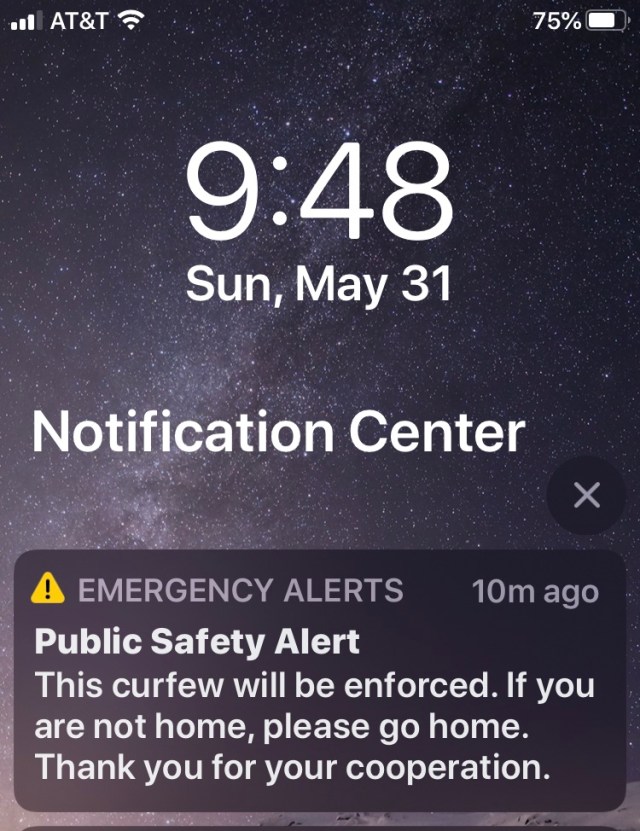
I was wondering about how about we will be reasonably relaxing social distancing when I got what I thought was an Amber alert on my phone.  No, the familiar tone was something different, a Public Safety Alert that was a warning to clear the streets.  In all our recent travels I puzzled over what area this curfew came from.  Tampa? West Palm Beach? Charleston? Philadelphia?

Suddenly the Coronavirus took a back seat to the civil unrest stemming from the tragic public killing of George Floyd in Minneapolis.   It’s apparent to me now that it is truly dangerous to be a person of color in America or a police officer patrolling urban areas where violent sharks prowl a sea of peaceful protestors.  And with a likely second wave of the virus on its way you can only hope you aren’t someone over the age of 65 or with a chronic condition, or living in a facility – whether a prison or senior care center.

Unfortunately, while some of these things we can change, others we are born into, and often inequalities in income, education and opportunity severely limit the progress possible.  While some non-violent offenders have been released from prison and some elders in homes rescued by their adult children, most are locked in their current situations.

It seems that there needs to be a profound change in how we care for the weakest and how we protect the most vulnerable.  Because, only then, as a society of equals, and not as self-isolating individuals protected by privilege, can we feel truly “safe” again.


The Floating Dead

IMG_7531

Second Wind has just completed its returning voyage to its home port in Rock Hall, MD.  Our winter plans had included spending some time in Florida on board the boat after we returned from Panama before we would make the long trip back up north.  The plan was to stop and spend some time at our favorite small town places like Swansboro and Belhaven in North Carolina.

On March 12 we left Tampa to sail south down to the Keys and around Florida on our journey back to the Chesapeake.  On March 13th the President declared a National Emergency for the coronavirus. Since then the national and state governments have issued a conflicting and confusing series of shelter in place, stay at home, safer at home and work at home quarantine orders, social distancing and travel restrictions, non-essential business closures, etc.  Despite all this we completed the 1400-mile trip through six states in about six weeks and arrived safely on Saturday, April 26th.

D819FECC-4A05-475D-92BB-AAA5CE04CFCDSecond Wind in downtown Tampa, site of our last pre-Pandemic Happy Hour at American Social.  Here is a recipe for the now classic Quarantini cocktail for your next virtual happy hour.

During that time we first saw the exuberance of youth as they hit the water in droves in Florida.  But then it was quickly tempered by new regulations and enforcement that eventually gave way to an eerie desolation as waterways and piers were vacated and the always lively waterfront bars and restaurants were shuttered.  A few establishments offered desperately hand-scrawled signs with phone numbers offering take out service.

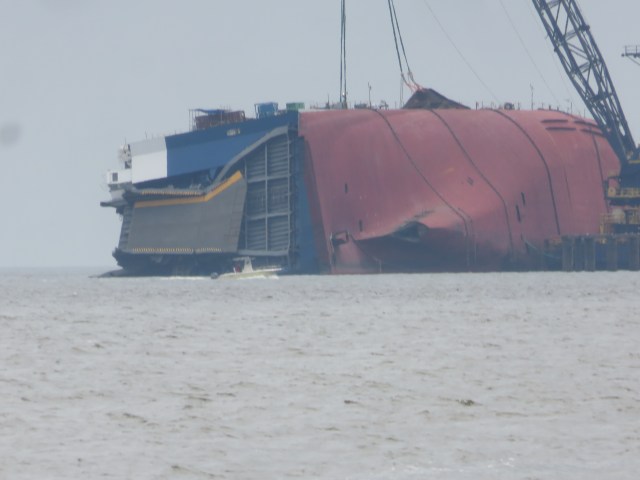
As we passed through Georgia we saw the hulk of a giant car carrier lying on its side near St. Simon’s Island.  The victim of human error, the ship was doomed to never be raised again.  Before the crisis it was scheduled to be sawed in pieces like some poor magician’s assistant, except it will never appear whole again.  (for more info Google “Sun Ray”)
IMG_7392

Many marinas were off limits to outside travelers or “transients” like ourselves.  Others would only allow fuel sales and mooring ball rentals, but with absolutely no one allowed to leave the boat, no one permitted on land.  Looks became harder, more challenging, and conversations shorter.

As we looked for places to fill our water tanks we felt like scavengers in some post-apocalyptic world.  But the common enemy didn’t wear bad makeup and shabby clothes and walk in halting steps with drooping shoulders.  The zombies looked just like us, and in many cases we would learn, they were not in any way discernible (almost 20% asymptomatic) from the unaffected.  (Unless they were coming south from New York or New Jersey then you just had to figure they were affected.)  No, this wasn’t The Walking Dead, it was something else, something a bit more sinister as it was actually real.

How to prepare for boating through the Apocalypse  

First, you spend some time watching The Walking Dead to learn the ins-and-outs of life where supplies are no longer on the shelves, how certain types of people will react, and how self-sufficiency becomes the key.  You also begin to feel the desperation and helplessness that occurs when the governments and institutions that you expect to protect you turn powerless.  You slowly realize that you can’t always fully provide for and protect the ones that you love.

Next, you stock your boat with needed supplies and spare parts well in advance of the surge.  You fill your tanks with fuel and water.   Ideally your boat should have sails for when fuel is unavailable or as auxiliary power, supplemented by solar panels or a wind turbine to provide electricity for refrigeration, navigation, communication, lighting and entertainment.  Fishing gear is also required for providing supplemental protein.

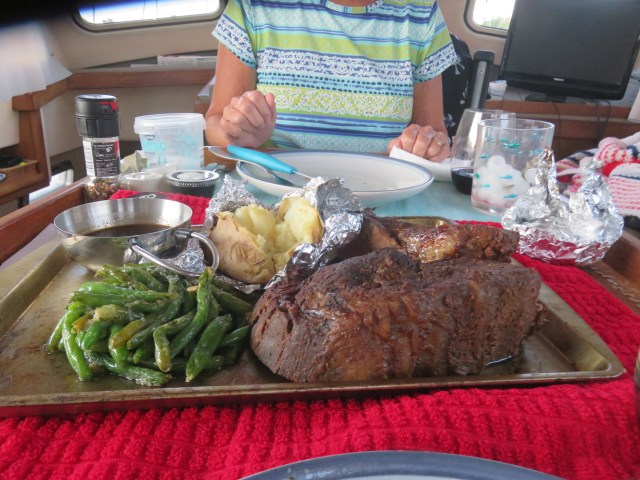
A motorsailer is a good choice for a bug-out boat, slow but efficient and comfortable. We would have been able to make the trip from Marco Island, FL to the Chesapeake on just one tank of diesel, but we did top off in Coinjock since we were stopping for water and take-out prime rib (Captain’s Cut shown below, bone removed for serving).
IMG_7634

Cruising North

Over the six weeks of our travel we made no effort to visit any of the waterside towns as their normally lively waterfronts were all but closed.  We fell into a routine that included rising with the sun and taking advantage of known tides and currents to schedule our stops.  We charged all our devices when the sun was shining and went to bed soon after the sun set.  When we were hit with bad weather we sat it out, but unfortunately this limited our access to power and hot water which comes off the engine.  What we originally hoped would be a relaxing pleasure trip became something else.

Our contact with the outside world was very limited as required by the quarantine requirements.  Since we were traveling home, our transit was considered not recreational, thereby permitted. In the evening after we anchored, typically in a remote area, we would try to connect to the national news through our HD TV antenna, but that wasn’t always possible.  When we could connect it seemed the news was never good.  We didn’t have WIFI and our phone data plan was limited.

During the long journey I had time to reflect on the situation and draw comparisons to what I have watched for years on The Walking Dead.  We had passed through the rivers of Georgia near where the show is actually filmed.  Nature is wild and wonderful, but without the stops in the normally friendly towns, visiting with the locals and other boaters, the world seemed a bit too wild, a bit too remote.  The boat provided a safe refuge from the pandemic, but it felt at times like the isolation of a prison. (to see a real floating prison, the Vernon C. Bain Correctional Center on NYC’s East River, view our previous story “Up the River”). Would extended living under these conditions be a life worth continuing?  At what point might people decide the risk of living life among others is better than the safety of isolation and loneliness?

Homecoming

We had made arrangements to dock the boat in Maryland but we were told that we would have to vacate the area immediately or else be subject to two weeks of quarantine in the state.   The marina was empty when we arrived, and we quickly offloaded all of our gear to prepare our boat for sale.  Although it had been some time since we left the Chesapeake, just in the last two months alone, the world had changed forever as we are still learning.

For the next chapter of our lives we will take our chances on land, although we are now realizing how lucky we were for our time aboard.  We are thankful for the people that did help us along on the way home.  While there is death, misery and true suffering  beyond our decks, there also great sacrifices and heroes working to make things better.   However, if you would rather take your chances on the water, please let me know, I might just have the right boat for you.  Click here for Second Wind sales listing.

AE3576B8-6966-4EF9-B9DC-AD4F1828CBC0

Back home on the Chesapeake, Magothy River


“You are responsible for your own wake!”

IMG_9549 

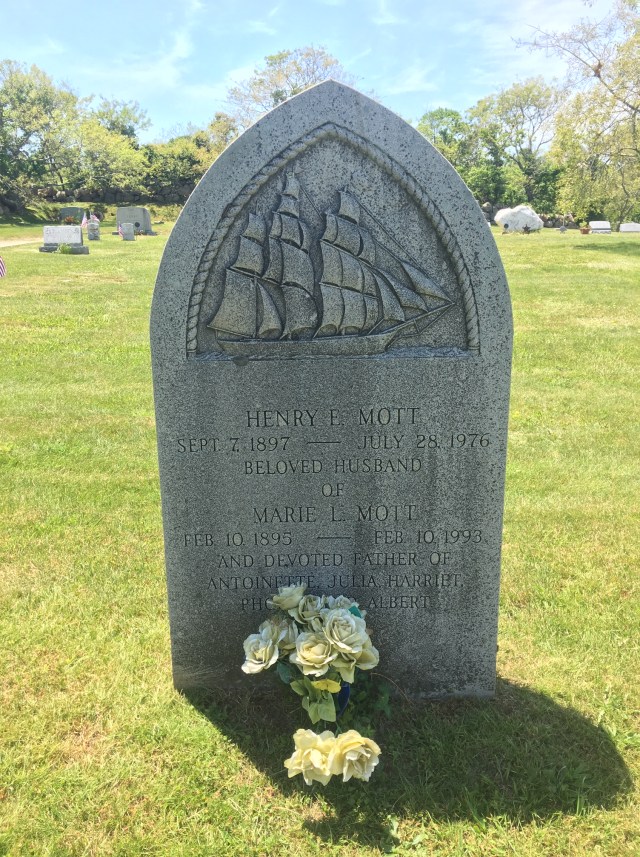
Cemetery in New Shoreham, Block Island, RI

While cruising you hear it on the VHF radio several times a day.  So exclaims the sailboat captain, or the woman sitting on her porch on the ICW when a power boat goes careening past oblivious of the size of its passing wake and the damage and disruption it causes.  Of course there are also responsible power boaters who will throttle back and grant a slow pass by courtesy if not for the “no wake zone” requirements. 

However today there are several situations where your lack of responsibility can lead directly to your own wake and funeral.  Here is one example during our sailing voyage from the Florida West Coast back to our home waters of the Chesapeake: 

We were entering the Gulf and rounding the cape of Anna Maria Island.  We had just come out of Tampa Bay,  where a few hours before we passed St. Petersburg where the Indy Car Race had just been cancelled due to the Coronavirus.  While monitoring Channel 16, as all responsible boaters with radios must do, we heard a dispatch from the “U.S. Coast Guard Station St. Petersburg, U.S. Coast Guard Station St. Petersburg, U.S. Coast Guard Station St. Petersburg.” They announced a live-fire exercise taking place that morning, 3.79 nm off Longboat Key.  This was right on our outside route to Venice, Florida.  We switched to Channel 22A to hear the details. 

Unfortunately with the timing and the large exclusion or safety zone of 8 nm, we would have to slow down to avoid the danger. After a few hours of slow tacking in the light southern breezes we heard on the radio “Uhh, Coast Guard, we’re seeing men firing weapons, is this practice or is this real?” Some boater, obviously with a radio but without the sense to monitor it, had wandered directly into the firing zone.  Now when he said “practice” I’m not sure if he was asking if the bullets were dummies or if they were live ammo, but I think he acknowledged who the really dummy was.  He clearly would have been responsible for his own and his passengers’ wakes and funerals had any of the overshot or strays hit them. 

In a similar incident a middle-aged man who thought he might have the COVID19 Virus decided to take his scheduled JetBlue flight since he wasn’t really sure.  Well, when he landed he got a text confirming a positive test for the virus.  Was he thinking about the health and safety of all the other passengers on that flight?

But if you’re young and you don’t think an “old people’s disease” will strike you down, why not go out and party with your friends, ’cause you’re all home from school and what else is there to do? Florida has been trying to crack down on this through closing marinas and most recently restricting vessels to remain at least 50 feet from each other and to carry no more than ten passengers (which seems like an arbitrary number to me).

130F464F-BFAE-456D-8BC6-A6D9AB8A9EBB

Now in the first case, there are established boating procedures and practices that require some simple education and a modicum of equipment and common sense.  For example, in another Coast Guard incident, the operator told the disabled boat – “we called the number you gave us, but no one answered.”  The response: “oh,  the phone has gone dead … lack of a charge.” 

In the second and third case, as we learn about: Social Distancing, Crowd Avoidance, Proper Hygiene – for yourself and others (ie. cleaning up after yourself), there may not yet be clear or agreed upon procedures or practices, but here common sense and courtesy trumps your self-interests.

And today, in dramatic contrast to the above, we were honored to witness one of our Ohio-class submarines depart the US Naval Submarine Base in King’s Bay for months at sea, serving as the base of our nuclear ‘scorched earth” deterrent.  We salute those Americans that serve our country either under the seas, or as doctors, nurses and support staff swimming in the contagion of our Coronavirus-infected hospitals and nursing homes.

FF7AA7F8-6527-43A0-AA4E-56A8508ACE4E_1_201_a

I pray that we properly screen our sailors for the virus before sending them to sea, and hope that the needed personal protection equipment finds its way to our front-line health care professionals.

Supporting Information

What to do if you have the virus: 

https://www.cdc.gov/coronavirus/2019-ncov/if-you-are-sick/steps-when-sick.html

Here is the original 15 Days to Slow the Spread – from the White House – issued on March 16, which has been expanded now to 45 days.  There may be some updates to this list so please check the CDC website for the latest information, but remember, you alone may be responsible for your own wake, and of those around you.

  1. Listen to and follow the directions of your state and local authorities.
  2. If you feel sick, stay home. Do not go to work. Contact your medical provider.
  3. If your children are sick, keep them at home. Contact your medical provider.
  4. If someone in your household has tested positive for the Coronavirus, keep the entire household at home.
  5. If you are an older American, stay home and away from other people.
  6. If you are a person with a serious underlying health condition—such as a significant heart or lung problem—stay home and away from other people.

Today’s guidelines build on the CDC’s general recommendations to help prevent spread of the virus. Americans should continue practicing strict personal hygiene, including washing hands regularly for at least 20 seconds at a time and wiping down surfaces in the home often.

UPDATE: Here are the most recent guidelines issued by the White House:

Click to access 03.16.20_coronavirus-guidance_8.5x11_315PM.pdf

The Master of Mystic – The Laughing Pirates 2020 Invitational Golf Outing Concludes in Orlando

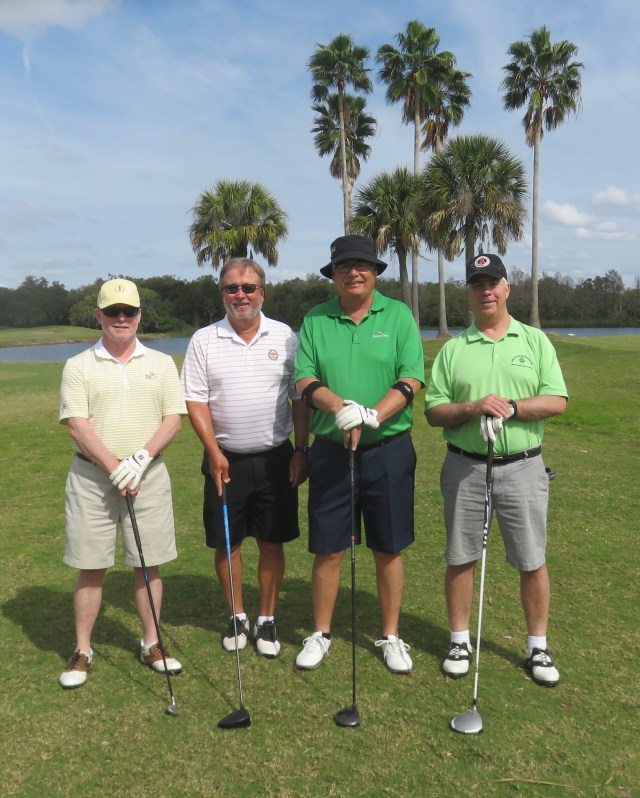
C0632050-BB5F-402E-9391-24618E3CDAB3_1_201_aThe fourth annual The Laughing Pirates Invitational held its final round on Wednesday, February 25th at the Mystic Dunes Golf Club in Orlando, FL.   This year’s winner is a familiar name for the series. Tim Guertin, brother of last year’s winner Rich Guertin, finished the final round several strokes ahead of the field, winning the coveted air freshener/deodorizer  trophy and bragging rights for the next year.
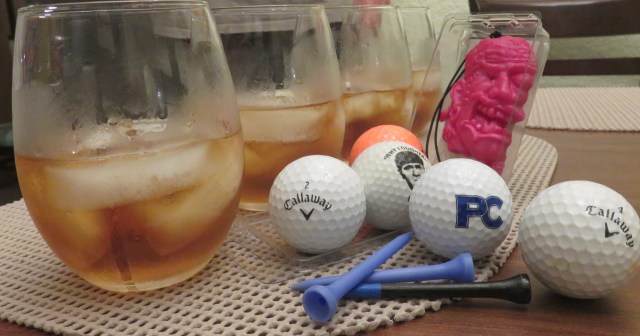
Tim showed good consistency over the three days of the series, and mastered the final course – Mystic Dunes.  He outclassed the field that suffered both off the tee, helping entertain the local alligators populating the many water hazards, and struggling around the cup, specially on the tough, multi-level greens at Mystic Dunes.

Tim had clear plans for his prize trophy, and will be installing his Laughing Pirate in the Porta-Potti head area in the center console of his Tidewater.   The Master of Mystic also calls Mystic Island, NJ his home port, where he reports seeing very few, if any, alligators.

A5F696AF-D594-49DC-8B74-2E2AACE14464_1_201_a401C6642-42F7-489C-AEDE-952E85ECD2A1_1_201_aMaking your Mark – Maker’s Mark is the official beverage of The Laughing Pirates Invitational Golf Outing.  Participant Tom Guertin reports he is looking forward to the fifth.
Ready for some reel fun?

4CFDDBD6-C8B8-45A3-BD08-93EDB1566CC3

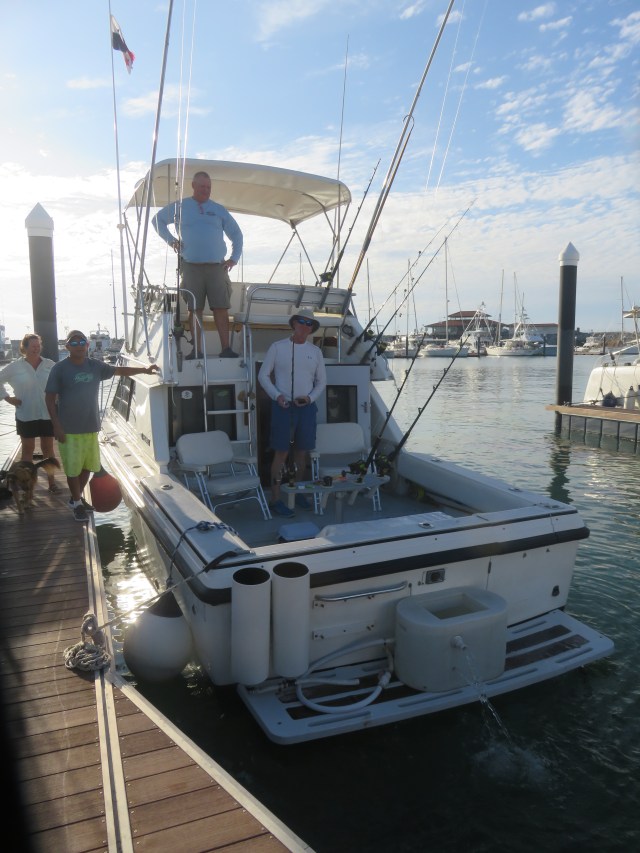
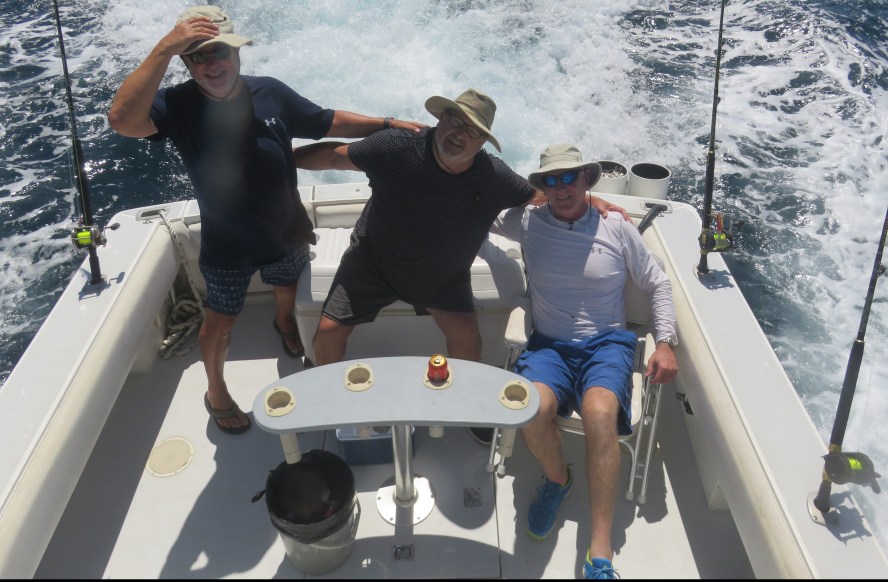
The winds and waves were light out of the southeast as we boarded our charter boat for a half-day of fishing along the Pacific coast of Panama.  I had studied the weather for the week and Tuesday, January 28th seemed the best day for reasonable seas.  It was a beautiful morning as our party of three headed out with our hired captain and first mate.

We had made an effort to get an english-speaking captain as none of our party could converse in Spanish.  It turned out he was an American, but was also a man of few words.  Our mate, a lively and engaging gentleman from Costa Rica, was more than willing to close the language gap with his words and gestures.

Our fishing started with catching some bait fish on our way out into the Panama Bay.      One of party, I’ll call him Jim, managed to snag four fish on one bottom-jigging cast.  From there we eagerly headed out to deeper seas with the mate busily rigging the rods and lures and releasing the trolling lines.

The efforts were eventually rewarded when after about twenty minutes we had a strike on one of the lines.  Jim expertly handled the capture which yielded a smaller size Dorado, also known as Mahi-Mahi.  This was just a taste, clearly the bigger ones were waiting for us below.

A long hour later, about 15-20 miles out into the Pacific,  the take-home catch count still stood at one.  Several beers were lost in the process, but soon the real fun was about to begin.  The captain had slowed the engines and asked us to move our deck chairs so that the mate could access the two engine compartment hatches beneath the chairs.  When the starboard engine was opened it glistened in the rising sun.  A steady spray of diesel fuel was coming from the front of the engine just under the bulkhead.  How long and how much fuel had leaked was unknown, but the engines were quickly shut off as the mate tried to assess the problem.

It seemed that a bleeder screw in the starboard fuel line had vibrated its way out of its housing and disappeared into the sump.  OK, one engine out of commission leaves one engine left, so the port engine would allow our fishing to continue.  Only it didn’t.  It briefly started, coughed, then died.  The mate was undeterred, and suggested he could fix the problem by taking the bleeder screw from the port engine and installing it into the starboard.  He would just need the tool kit and a few minutes to get us underway.  Only there wasn’t a tool box, but a general purpose Leatherman.

Somehow, our hearty first mate made it work well enough to get the starboard engine running at low speed with minimal leakage.  The captain explained that “due to technical difficulties” we would be returning (actually limping) back to port.  He admitted that work had been done on the fuel system the previous day and in a test run everything ran great.

I wish there was a happy ending to this story, but the only resolution was a partial credit on the cost of our charter, and we did manage a dinner out of the lone Dorado.

I am glad that we were onboard a twin diesel cruiser on a calm day,  as spraying gasoline isn’t as well behaved as diesel oil on a hot engine and being dead in the water without a sea anchor can be uncomfortable.  We had gotten a recommendation from our local rental agent for this captain and company, but still, perhaps we should have been more proactive.   For example, one of our party did notice some slick around our boat during our cruising, well before the captain reported that he smelled something.  I don’t think Dorado or any game fish is attracted to diesel “chum” which could explain our lack of success in our shortened half-day of trolling.

Regarding other procedures,  I don’t think the captain called anyone to report his ship’s condition, and we were well out of cell range to send our own notices. Nor do I think the engine was inspected after the reported “test run” as the leakage usually starts with a few visible drops before it goes into full spray mode.

3C2E1692-1484-4DD4-9BFD-289590B3D45CDaily inspections are a safety must, especially after a major service to a critical system.  I don’t understand the lack of even a basic tool kit with ratchets, wrenches and spare parts.

I don’t have a good answer to how to avoid these dangerous and aggravating situations when putting your trust into another captain and his boat, so please feel free to offer your suggestions.


A Bridge Too Near (Continued)

2f3162bd-ae7f-4c8c-9ba8-efd78f2be160.jpeg

Best Wishes for the New Year!

As we started under the Julia Tuttle Causeway Bridge it was impossible to visually judge our mast height relative to the bottom of the bridge, but it was damn close.  We watched as the mast itself sailed just under the crossbeams, but then saw that the VHF antenna, rising another foot above the 55′ mast was bending backward as it met the crossbeam.  Fortunately, due to it flexible construction it bent fully back then whipped back in position as it cleared the crossbeam.  The process repeated several times as we went under the full width of the two bridges.  We emerged with the mast intact, the antenna now only slightly bent backwards from its full upright position.  A quick check of the radio showed that it was still fully functional.  We were able to proceed to our planned anchorage and complete our daily objective.  We were well settled in at last light as we watched the televised conclusion of the NASCAR finale at the nearby Homestead racetrack.  Later that night, as we saw a parade of police escorted vehicles on the nearby causeway, we debated which of the neighboring yachts were supporting drivers, owners and major sponsors.

92CEAB5C-4DE1-4509-B1AD-9317A920C2EC

We had avoided having to back track many miles north to bypass the bridge by going outside at the Fort Lauderdale inlet.  We could then proceed as scheduled the next day outside at the cape of Florida and into the upper keys on our quest to the west.  At 65′ our next bridge at Channel 5 wouldn’t be an issue.

175A0E49-2AC8-4E1D-933F-DFFF1339B751

The rest of our trip was relatively uneventful until we arrived at our final port and found the tide was again agin’ us.  It seems that a red tide was responsible for a massive fish kill in Charlotte Harbor, most of which ended up in the Burnt Store Marina area.  The dead fish and their stench eventually dissipated so we can look forward to a clean start in the New Year.   Hope everyone can look forward to a clean start as we enter a new decade – welcome 2020!


A Bridge Too Near

DD3FCE84-7557-49A1-B206-13B4FF5CA295

Signboard on the Julia Tuttle Causeway Bridge

Blame it on the full moon, the tides, northerly winds, or yes even global warming (aka Climate Change), but the 56ft. reported bridge clearance did not appear to be correct that late afternoon as we hurried south through Miami on the ICW.  It was coming up on low tide and the reported clearance is set at the historical median high tide.  Our motorsailer, Second Wind, is listed as a 55′ stock vessel, but that’s before adding the necessary top mast-mounted wind gauges and communication antennae.

The Julia Tuttle Bridge, once listed as 55′ and now 56′, is the most height limited on the main ICW, where 65′ is the operating standard.  I could have noticed that other bridge signboards weren’t usually showing the full 65′ on our migration south down the ICW in Florida.  However, we chose the shortest, in-shore route and were a bit perplexed when we saw the signboard.  Low tide was approaching, but was so darkness.   Should we anchor in place, just north of the bridge in less than ideal location?  Would the next low tide be any better?

After consulting with the crew, we decided to try it. While the center is usually the tallest, I noticed that the western span seemed to rise to the actual central of the full bridge, and that’s where we headed.  Proceeding carefully, waiting for no other traffic and the resulting wake disturbances.  Did we make it?  Stay tuned, and in the meantime check out the latest report from the United Nations Environment Program that describes how we are falling far short of our carbon limited ambitions.

The UNEP Emissions Gap Report 2019 can provide some interesting reading for those who spend time on or near open water.

CF7BBC3D-2D3C-43CA-A432-4E38779E1BB1

Be Prepared.

Screen Shot 2019-10-31 at 11.22.30 AM

Except for Halloween and scary movies, nobody really likes to be frightened, shocked or scared.  How would you like to see this notice appear when you try to go to ready.gov to get needed emergency information? 

BE PREPARED –  was the motto for the scouting organization over sixty years before I became an Eagle Scout back in 1974.  In the dark days leading up to World War I it was an obvious necessity. Today in a world where everything is available online with one-day Amazon Prime delivery it doesn’t seem so important.  Until it suddenly becomes very important, because all of the tools we rely on suddenly stop working. 

It may be caused by an engine/battery failure at sea or due to a Public Safety Power Shutoff (PSPS courtesy of PG&E) executed in a desperate attempt to stop California wildfires during high winds and dry conditions.  If you’re not prepared, you’ll find cell phones with dead batteries unable to summon help and your suddenly short on supplies, medicines, or a way to buy things that doesn’t require electricity or telecommunications.  Some emergencies allow you to shelter in place, like outages, wind/water/fire storms where you are not in a flood or evacuation zone.  At other times you will need to GET OUT, and this is when a GO bag becomes essential.  However, whether your emergency requires sheltering-in-place or bugging-out, here are some general tips to keep you prepared at home: 

  1. Always keep your phone, computer, and other portable devices as fully charged as possible.  Be obsessive about plugging in when you can whenever you are traveling and uncertain about your next power source.  There is some debate if   this constant charging reduces battery life more quickly than the normal two-year cycle, but what is your life worth? 
  2. Have a back-up source of power – have portable rechargeable battery packs and the cords needed to power up your cell phone.  Have a car adapter plug and small inverter supported by a car that has a full tank of gas.  Remember that gas pumps don’t work without electricity.   If you can afford it, an auxiliary power source like a generator or solar panels that aren’t wired into the utility power grid can be useful.  
  3. Stock a supply of fresh batteries for your flashlights, radios and other devices that you will need in an emergency.
  4. Keep some amount of CASH money on hand for when your credit cards and bank cards don’t cut it in a prolonged outage.
  5. Learn how to operate garage doors and electronic locks when the power has gone out – before it has gone out.  
  6. Refrigeration Management – freeze plastic jugs or bottles to provide emergency cooling of perishables and extend the time your refrigerator can last without power.  Move defrosting items from the freezer to the refrigerated section to not waste the cooling potential of defrosting items.  Limit opening the freezer and refrigerator sections.  Have a cooler with the frozen ice jugs for cooling beverages and for commonly used items so you keep the fridge closed.  
  7. Stock non-perishable food supplies and a can opener, plus fill containers with water before water pressure is lost.  Buy your supplies before the shelves at the local Walmart are stripped.  Look up information before websites are inundated by the panicked.
  8. Keep hard copies of lists of telephone contact numbers, addresses, and bank and insurance account numbers that you may need when you can’t access them electronically. 
  9. Keep at least a one-week supply of medications and health care supplies as well as power sources for needed medical devices.  This is in addition to a good first aid kit with your personally needed hygiene and remedies – from cold medicines to aspirin and digestion aids. 
  10. Find out where you may have a local charging center in your neighborhood.  Utilities,  aid organizations and even local TV channels will often make portable generators available for recharging of personal electronics in your neighborhood. 
  11. Surge protectors – unplug or protect with a surge protector any sensitive electronics before power is restored as voltage spikes can occur and damage these devices.  
  12. Avoid travel by car or bike when power outages render traffic signals useless and courtesy rules may not be followed, and lack of street lights make bikes or pedestrians difficult to see. 
  13. Have a go bag when you need to evacuate because of fire, flood or earthquake.  Here’s a suggestion from CalFire https://www.facebook.com/watch/?v=556705514861861 
  14. When you must go out – wear high visibility clothing, head coverings, and facemasks or dust masks.  Check in with neighbors to see if they need assistance in evacuating. 
  15. Signal kits – flashlights, mirror reflectors, strobe lights, whistles and other sound generators can be useful to attract needed attention.  

Please add any tips you’d like that have helped you prepare for extreme conditions and surprises in the comments section below.  Remember although we should all hope for the best, please plan and prepare for the worst.

IMG_9833
Without a daily supply of electricity your communications device is about as useful as this petrified iPhone 4S


Pathway to the Pacific

fullsizeoutput_5f41The crew of Second Wind completed its 3300 mile journey by land from North Palm Beach, FL to a grand view of the Pacific Ocean from Patrick’s Point State Park north of Arcata, CA.  The trip had taken a few weeks, with important stops at the Jersey Shore and key western National Parks.

Today the Coastal Sitka Spruce forest was fresh and smelling of pines and wild flowers, as long as you stayed downwind of the seals sunning themselves on the rock outcroppings along the shore.  Fishing boat charters, mostly likely out of nearby Trinidad or Eureka harbors bobbed between the outcroppings, surely knowledgable of the local underwater projections and currents.

The morning sea fog was still visible further offshore into the early afternoon as we admired the ruggedness of the California coast. Trail signs indicated recent mountain lion sightings and urged caution to small children and pets.

The vast undeveloped and protected expanse of northern California was a stark contrast to the overdevelopment of the coastal and intracoastal waterways of southern Florida.  A lack of a natural harbors and inland waterways here requires more careful,  weather-aware planning for cruisers.  Our crew will press further north to Oregon and explore possibilities for future cruising utilizing charter boats out the of the Pacific Northwest.