
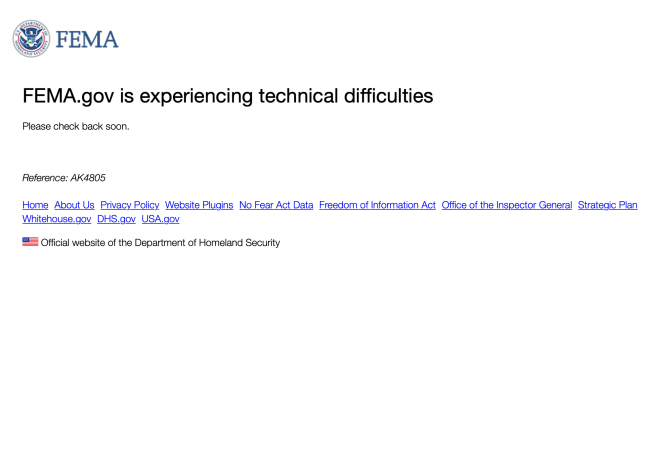
Except for Halloween and scary movies, nobody really likes to be frightened, shocked or scared. How would you like to see this notice appear when you try to go to ready.gov to get needed emergency information?
BE PREPARED – was the motto for the scouting organization over sixty years before I became an Eagle Scout back in 1974. In the dark days leading up to World War I it was an obvious necessity. Today in a world where everything is available online with one-day Amazon Prime delivery it doesn’t seem so important. Until it suddenly becomes very important, because all of the tools we rely on suddenly stop working.
It may be caused by an engine/battery failure at sea or due to a Public Safety Power Shutoff (PSPS courtesy of PG&E) executed in a desperate attempt to stop California wildfires during high winds and dry conditions. If you’re not prepared, you’ll find cell phones with dead batteries unable to summon help and your suddenly short on supplies, medicines, or a way to buy things that doesn’t require electricity or telecommunications. Some emergencies allow you to shelter in place, like outages, wind/water/fire storms where you are not in a flood or evacuation zone. At other times you will need to GET OUT, and this is when a GO bag becomes essential. However, whether your emergency requires sheltering-in-place or bugging-out, here are some general tips to keep you prepared at home:
- Always keep your phone, computer, and other portable devices as fully charged as possible. Be obsessive about plugging in when you can whenever you are traveling and uncertain about your next power source. There is some debate if this constant charging reduces battery life more quickly than the normal two-year cycle, but what is your life worth?
- Have a back-up source of power – have portable rechargeable battery packs and the cords needed to power up your cell phone. Have a car adapter plug and small inverter supported by a car that has a full tank of gas. Remember that gas pumps don’t work without electricity. If you can afford it, an auxiliary power source like a generator or solar panels that aren’t wired into the utility power grid can be useful.
- Stock a supply of fresh batteries for your flashlights, radios and other devices that you will need in an emergency.
- Keep some amount of CASH money on hand for when your credit cards and bank cards don’t cut it in a prolonged outage.
- Learn how to operate garage doors and electronic locks when the power has gone out – before it has gone out.
- Refrigeration Management – freeze plastic jugs or bottles to provide emergency cooling of perishables and extend the time your refrigerator can last without power. Move defrosting items from the freezer to the refrigerated section to not waste the cooling potential of defrosting items. Limit opening the freezer and refrigerator sections. Have a cooler with the frozen ice jugs for cooling beverages and for commonly used items so you keep the fridge closed.
- Stock non-perishable food supplies and a can opener, plus fill containers with water before water pressure is lost. Buy your supplies before the shelves at the local Walmart are stripped. Look up information before websites are inundated by the panicked.
- Keep hard copies of lists of telephone contact numbers, addresses, and bank and insurance account numbers that you may need when you can’t access them electronically.
- Keep at least a one-week supply of medications and health care supplies as well as power sources for needed medical devices. This is in addition to a good first aid kit with your personally needed hygiene and remedies – from cold medicines to aspirin and digestion aids.
- Find out where you may have a local charging center in your neighborhood. Utilities, aid organizations and even local TV channels will often make portable generators available for recharging of personal electronics in your neighborhood.
- Surge protectors – unplug or protect with a surge protector any sensitive electronics before power is restored as voltage spikes can occur and damage these devices.
- Avoid travel by car or bike when power outages render traffic signals useless and courtesy rules may not be followed, and lack of street lights make bikes or pedestrians difficult to see.
- Have a go bag when you need to evacuate because of fire, flood or earthquake. Here’s a suggestion from CalFire https://www.facebook.com/watch/?v=556705514861861
- When you must go out – wear high visibility clothing, head coverings, and facemasks or dust masks. Check in with neighbors to see if they need assistance in evacuating.
- Signal kits – flashlights, mirror reflectors, strobe lights, whistles and other sound generators can be useful to attract needed attention.
Please add any tips you’d like that have helped you prepare for extreme conditions and surprises in the comments section below. Remember although we should all hope for the best, please plan and prepare for the worst.

 the laughing pirates